

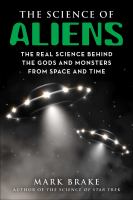
The science of aliens: the real science behind the gods and monsters from space and time
Mark Brake著
館長分享
The Mid-Autumn Festival, which falls on the 15th day of the eighth lunar month when the moon is full, is one of the most cherished festivals for many of us in Hong Kong. Families gather to enjoy mooncakes, play with lanterns, and gaze at the moon together. It is hard not to wonder whether other life forms might be living beyond the Earth, just like the festival’s legend about Chang’e (嫦娥) and the Jade Rabbit. This natural curiosity is precisely what Mark Brake’s “The Science of Aliens” explores.
Brake, who established the world’s first astrobiology degree in 2005, is a renowned science communicator whose work draws together science, history, and culture. Rather than focusing on technical language, he tells the story of how ideas about extraterrestrial life have evolved over thousands of years, from ancient Greek philosophers to the space age, and how science and popular culture have continually shaped each other. Famous films and stories are woven in as examples, making the history feel both familiar and engaging.
The chapters on alien biology and strange planets are particularly fascinating. Brake explores what aliens might actually look like and the types of environments needed to support them. For instance, he examines why the “Heptapods” in the film “Arrival” bear such a striking resemblance to octopuses. For movie fans who enjoy films like “Alien” or “Avatar,” these sections provide a captivating behind-the-scenes look at the biological possibilities that inspire science fiction.
The idea of alien contact always comes with mixed feelings of fear and hope. One standout example is the Great Moon Hoax of 1835, when a New York newspaper published a series of articles claiming that life had been discovered on the Moon. Though the stories were eventually exposed as fabrications, they had already captured the public’s imagination. This historical fascination feels very similar to our own local urban legends, such as the famous UFO sightings at Wah Fu Estate in the 1980s.
If this book sparks your curiosity, there are several enjoyable ways to continue exploring in Hong Kong. You can visit the Hong Kong Space Museum in Tsim Sha Tsui to walk through the “Hall of the Cosmos,” which showcases the science and evolution of the universe, or take a trip to the Astropark in Sai Kung to see how Chinese and Western astronomical instruments have been used throughout the centuries. Ultimately, “The Science of Aliens” is a thoughtful, engaging read that reminds us the search for life in space remains one of humanity’s greatest adventures.