

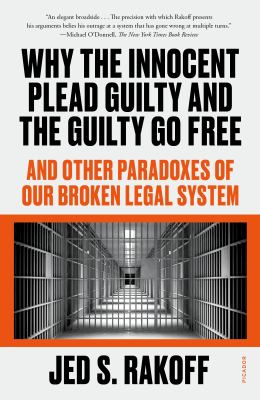
Why the innocent plead guilty and the guilty go free: and other paradoxes of our broken legal system
Jed S. Rakoff著
館長分享
“A sense of justice is central to human endurance. No matter what wrongs we suffer or misfortunes we withstand, the belief that justice will ultimately prevail is part of what keeps us going.”
— Jed Rakoff, Why the Innocent Plead Guilty and the Guilty Go Free, page 3
Rakoff’s opening is heartbreaking: people rely on justice to save them from misfortune, but in reality, miscarriages of justice are common due to human error.
“Why the Innocent Plead Guilty and the Guilty Go Free” attempts to unveil the causes of these miscarriages of justice in the United States. Drawing on his own experiences on the bench, Rakoff attributes such injustice to both human nature and systemic flaws. The notorious practice of plea bargaining, together with the mandatory minimum sentences often puts the accused in a position to plead guilty to a lesser offence that they never committed, simply to avoid more severe charges and prolonged imprisonment. Consequently, the widespread use of plea bargaining has gradually reshaped criminal justice from open trials to private negotiations outside the courtroom.
But beyond the fear of a lengthy sentence, what exactly compels the innocent to plead guilty? Rakoff observes that individual psychological states and biases contribute to this tragedy. When individuals step into specific roles, like FBI agents, prosecutors, witnesses or jurors, they often believe what they want to believe, despite evidence telling another story. In this way, this unconscious bias becomes a source of misfortune for others. The fear of having no hope of acquittal makes an innocent person compromise. This reminds me of the findings of the Stanford Prison Experiment, where people rapidly internalise their roles at the expense of moral behaviour. The difference here is that the cases in this book are real. We are talking about actual human beings and wasted lives.
Beyond being well-written, this book is notable because Rakoff is one of the few legal practitioners who positively incorporates psychological research when analysing the criminal justice system. Rather than attacking any specific groups of people, this book objectively reviews the flaws of each component in the legal system. Because individuals are reluctant to admit their mistakes, whether due to insufficient knowledge in understanding forensic evidence, false memories or unconscious bias, people end up paying the price for these miscarriages of justice.
Anyone who wishes to have a deeper understanding of criminal justice and its limitations is strongly encouraged to read this book.